EN
EN  CS
CS
 DA
DA
 DE
DE
 ES
ES
 FR
FR
 HU
HU
 IT
IT
 JA
JA
 KO
KO
 NL
NL
 NO
NO
 PL
PL
 BR
BR
 RO
RO
 SK
SK
 SL
SL
 SV
SV
 TR
TR
Magyron Fundix
Magyron Fundix: Your Path to In Depth Crypto Education
Sign up now

Magyron Fundix acts as an entry point, not a learning hub. Many people search for investment education and can’t find where real discussion starts. The site solves this by organizing introductions to independent education firms. No teaching happens on the site itself. No guidance appears. The function stays limited and transparent. Open the door. Step back.
Connection begins at registration. Users provide a full name, an email address, and a phone number. These details allow educators to reply directly and explain how their educational discussions are structured. Topics, depth, and formats vary by educator. No filtering occurs. No bias appears. It feels like requesting a meeting, not joining a class. The next step depends on conversation, not automation.
Education accessed through these connections helps people put ideas into perspective. It supports clearer thinking, not certainty. Risk remains part of markets. Outcomes stay uncertain. Research still matters. Comparing viewpoints still matters. Speaking with qualified financial professionals before decisions supports balance. What topics feel unclear right now? Which areas deserve slower review? Cryptocurrency markets are highly volatile and losses may occur.

The purpose of the registration process is simple: to create a direct line of communication. Many individuals arrive with questions but are unsure where to begin. By keeping registration straightforward, the platform allows for organic conversations to unfold, free from unnecessary hurdles. No lessons or opinions are shared at this stage, just a brief step that opens the door to valuable connections, similar to signing a name at a networking event.

The registration process requires only three key pieces of information: your full name, email address, and phone number. Each element has a specific role: your name identifies your interest, the email enables written communication, and the phone number allows follow ups. Educational firms use these details to share insights about their learning formats and the subjects they teach. There’s no sorting or ranking, curiosity drives the next steps. Magyron Fundix simply opens the door to education, but thorough research and consultations with financial professionals are necessary for informed decision making. What aspects of the process would you like to explore further?

Educational content doesn’t come with a “one size fits all” solution. What you learn is shaped by the educator and the topics explored. Markets are unpredictable, and reactions often come fast. The role of education is not to provide concrete answers but to foster observation and reflection. Learning is a personal experience, some learners take time to reflect, while others take notes. That moment of confusion? It signals the beginning of deeper understanding. As you make connections, clarity will emerge. And remember, cryptocurrency markets are volatile, so losses are a possibility.
The site’s role is limited to handling logistics. When a user registers, basic details such as a name, email, and phone number are processed through an uncomplicated system. The name signals the user’s interest, the email provides a means for responses, and the phone number allows for future follow ups. Beyond this, the system takes no further action. No materials are kept, no perspectives are offered, and no dialogues are influenced. Once the registration process is complete, the system steps back and stays silent.
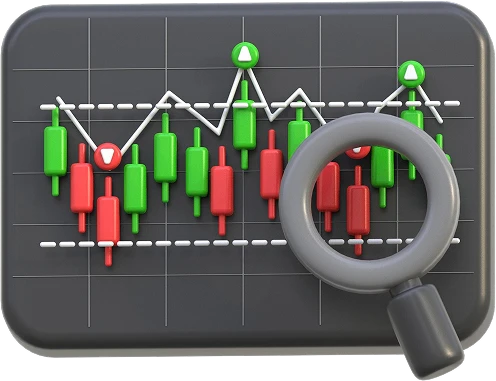
Educational content usually explains how markets behave in different phases. It explores why headlines trigger sudden moves, why momentum fades, and why calm periods are important too. Past events are used as examples to describe behavior, not as advice. Learners often use this by comparing current market action with past periods and spotting what’s different rather than expecting exact repeats.
Some lessons are designed to improve observation habits. They talk about how attention shifts, how stories shape market perception, and why certain patterns keep returning. Learners use these lessons by slowing down, taking notes, and revisiting what they learned once the market has calmed down.
Education doesn’t give direct answers or guarantee success. It doesn’t remove uncertainty or stop mistakes from happening. Its value depends on how thoughtfully you use it. Looking at different viewpoints broadens your perspective. Independent research is still necessary. And talking with qualified financial educators can help you make balanced decisions.
For beginners, every trade can feel like a judgment on their skills. Winning builds confidence, while losing hits emotionally. Experienced investors, however, focus on the behavior behind market moves. They understand that fear usually spikes when prices fall and confidence rises at peaks. These emotional cycles repeat over time, across eras. The skill lies in identifying this rhythm rather than predicting exact timing.
New investors often see price movements and feel compelled to act. A rising price feels like a missed opportunity if not seized, while a drop can seem like a looming threat. But seasoned investors understand that price action alone isn’t the deciding factor. It’s the context around that movement that truly matters. Timeframes provide perspective, helping slow emotional reactions. While risk is always there, experienced investors know how to respond more thoughtfully. Calm decisions come from recognizing the market’s tendency to overreact and the importance of staying grounded.
For new investors, the results are everything. Winning feels like a personal victory, and losing feels like a blow to their judgment. Experienced investors, however, focus on the patterns behind these results rather than the outcomes alone. They recognize that fear usually creeps in during market lows, and confidence spikes near highs. These emotional cycles are recurring, showing up in market charts over decades. The key is understanding the rhythm of these patterns and not trying to predict exact timing. By understanding why behaviors repeat, investors gain greater awareness and improve their decision making.
Many new investors stop learning once they begin trading. They assume the research phase is over, and action is now the focus. But experienced investors never stop observing. They continuously review past decisions and compare them against different market periods to gain clearer insights. Research evolves with experience as their understanding deepens. Regular discussions with financial professionals test and refine their ideas. Over time, learning shifts from seeking quick answers to honing the lens through which they view the market, making incremental improvements along the way.
New investors often treat headlines like urgent directives, each update demands immediate attention. But experienced investors know that information needs context to be truly valuable. One data point doesn’t provide the full picture. They understand that events unfold over time and are connected in ways that require thoughtful reflection. With time and education, investors learn to filter out the noise and focus on the bigger picture. It’s not about quick wins but about understanding how various pieces of information fit together to form a clearer, more complete understanding.
Investment education helps reveal how various market forces interact over time. Price changes never occur in isolation. Typically, factors like volume, market participation, and sentiment move together. Markets follow cycles, pausing, speeding up, and then slowing down again.
By studying historical cycles, it becomes clear that these patterns tend to repeat in different forms. Education teaches that calm periods often precede spikes in activity, much like the stillness before a storm.
It’s about recognizing the pause between the waves, not just focusing on the splash. This perspective shift encourages more patient observation, helping learners see short term fluctuations as part of a larger, connected trend.
Investing education often begins with broad concepts, providing learners with a foundational understanding of how markets work, why prices fluctuate, and how participants behave. It’s like learning the rules of a game before watching it unfold.
At this early stage, new learners are introduced to basic terminology, historical market events, and common patterns. This foundational knowledge sets the stage for deeper exploration into more complex topics.
Some educational content moves beyond simple facts, focusing on the context behind market events. It helps learners understand that similar events can lead to different outcomes depending on timing and the broader environment. Take interest rate changes, for example. The impact of rate hikes in 2008 was drastically different from the effect they had in 2022. This shift in focus teaches students to compare scenarios and realize that markets don’t always repeat in a predictable manner. Gaining this contextual knowledge helps reduce impulsive reactions, encouraging learners to approach situations with more patience and thoughtfulness.
A core aspect of investing education is understanding the recurring patterns in market behavior. Fear often emerges during market downturns, while confidence peaks during upswings. By studying charts and timelines, learners can observe how these emotional cycles have played out across different decades. The goal isn’t to predict precise price points but to become aware of these emotional phases. Recognizing the rhythm of market cycles allows for more thoughtful decisions, rather than trying to time the market perfectly.
Some educational content focuses on the limitations of investing knowledge, teaching that education can’t provide certainty in market predictions. Unexpected events and disruptions can drastically change the course of the market. This material helps learners understand and frame risk, encouraging them to embrace uncertainty. It’s like knowing where the edge of the map is instead of assuming the road keeps going. This understanding keeps learners grounded, helping them avoid overconfidence and reminding them of the unpredictable nature of markets.
Reflective education is a key element in deepening understanding. Learners are encouraged to review past periods, compare different perspectives, and revisit concepts once the dust has settled after market movements. This approach emphasizes long term comprehension, allowing learners to refine their knowledge over time. Keeping a journal, observing patterns, and revisiting materials after reflecting on experiences all help solidify learning. Engaging with financial professionals also helps strike a balance and provides valuable insights before making decisions. In volatile markets, such as cryptocurrency, understanding risk management is essential to protect against potential losses.
Investment education becomes crucial when expectations exceed reality. Many newcomers expect quick rewards from the market, but history shows that things don’t always move that fast.
Events like the market crashes of 2000, 2008, and 2022 are stark reminders that patience often matters more than trying to predict every move. Education helped some investors gain clarity during these tumultuous times, showing them that waiting is often a necessary part of the process.
While it didn’t remove the disappointment of slow progress, it offered a deeper understanding of why things can feel uneven before the picture becomes clearer with time.
Market activity often provides early clues of potential changes, even before they become fully evident. Movements might slow, trading ranges could narrow, and participation may wane. These subtle shifts are commonly discussed in educational settings, helping individuals understand their significance without rushing to conclusions. While pauses can signal upcoming moves, not every lull results in change. Education encourages a mindset of careful observation, emphasizing patience over impulsive decisions.
Magyron Fundix connects those interested in investment education with independent educators who facilitate these discussions. Through these connections, learners can better understand how market behavior is typically analyzed across different conditions. Registration is the first step to initiating this connection, and the process is simple.
Users provide their full name, email address, and phone number, which allows educators to reach out. The registration process doesn’t offer any educational materials or advice. Its purpose is solely to establish contact, leaving the interpretation and decision making up to the individual.
Magyron Fundix doesn’t control market movements. Events such as policy changes, shifts in sentiment, capital flows, and unexpected occurrences drive outcomes. The site’s focus is on connecting people with educational resources, not on offering direct advice. It links individuals to educational firms, providing an opportunity to learn at their own pace, without pressure or predetermined direction. This method allows for conversations to evolve naturally, promoting thoughtful decision making.
Education tends to gain more attention during periods of heightened market activity. Many individuals search for explanations, sometimes without fully grasping the questions they need to ask. Magyron Fundix offers a more measured approach to learning, helping users begin their journey with clarity and structure. Registration is simply a way to initiate contact. It doesn’t deliver educational content or opinions. The actual discussions take place outside the site.
The education accessed through these connections is most valuable for understanding current market conditions rather than predicting future events. By reflecting on past events, like the crises of 2008 or 2020, one can see how similar patterns and reactions tend to emerge over time. The future remains uncertain. Research is always a personal endeavor, and comparing different perspectives is crucial. Engaging with knowledgeable financial educators before making decisions ensures a more balanced approach.
Learning works best when it follows a steady pace. Quick exposure can overwhelm beginners, while taking things slower allows ideas to sink in and connect. Looking back at years like 2008 or 2022, it's clear that hurried reactions led to confusion.
Education encourages a more spaced out approach, allowing patterns to emerge on their own. It’s like letting fog lift gradually rather than rushing through it , clarity arrives with patience, not speed.
Trading education helps learners understand how price movements unfold over time. Markets don’t move in a straight line. They pause, accelerate, and reverse. Education breaks down the reasons behind these shifts and explains why traders often jump to conclusions too quickly. Looking at periods like 2017 or 2021 shows how excitement can peak just before markets lose structure. It’s like learning to interpret traffic patterns rather than reacting to every honking horn.
Trading education often focuses on timing awareness rather than just signals. A sudden price move might seem massive when viewed in isolation, but it’s much smaller in the context of a bigger picture. Learning to see entries and exits within that broader framework helps reduce rash reactions to swift price changes. Mastering timing is about knowing when to stay put.
Trading behavior repeats because human behavior repeats. Fear shows up during market drops, and confidence grows near market highs. Education helps learners recognize these recurring cycles, as seen in years like 2008, 2020, and 2022. While patterns don’t guarantee specific outcomes, they provide valuable reference points. The key is identifying these repetitions without assuming they will unfold the same way every time.
Education is most powerful when traders take the time to reflect on past decisions in a calm, thoughtful way. Revisiting entries, exits, and missed opportunities connects actions with results. Reflecting on different approaches adds new perspectives. Independent research is crucial, and asking thoughtful questions sharpens understanding. Consulting with experienced financial professionals before making any decisions ensures a balanced approach. Often, traders gain more from reviewing one trade than from analyzing dozens of new charts.
Trading education works best when everyone knows their role. Educators offer clear insights into market structure and behavior, while learners take the time to reflect on and apply what they’ve learned.
By sticking to the essentials, discussions stay on track and purposeful. Taking the time to fully absorb explanations helps cut down on confusion, and asking questions ensures clarity by preventing assumptions. Learning advances when expectations are realistic and boundaries are clearly defined.
After registration, the provided contact details go through a straightforward routing process. Your full name, email address, and phone number help guide inquiries to the most relevant educational firms. These firms may then share information on how their learning discussions are structured. The site itself doesn’t offer any learning materials or guidance , it’s more like initiating an introduction rather than enrolling in a course. What happens next is determined by the conversation that follows.
Doubt is an inevitable part of markets. Education doesn’t remove uncertainty but helps put it in perspective. It allows learners to understand how price, timing, and behavior interact over time. This awareness encourages a more measured response during volatile market moves. History shows that uncertainty evolves, but it never completely disappears. Education helps clarify boundaries but doesn’t guarantee clear answers.
Magyron Fundix keeps its role to simply facilitating connections, making sure expectations are aligned. The actual teaching takes place outside of the site. Evaluation is a personal journey. This separation ensures that conversations remain centered on learning, not on specific outcomes. Research is essential. By comparing different viewpoints, individuals can gain a more rounded understanding. Speaking with qualified financial professionals before making decisions helps keep a balanced approach. The volatility of cryptocurrency markets means losses can occur.